CarOnSale
- Trade buyers only
Visit official website www.caronsale.comCompare with another platform
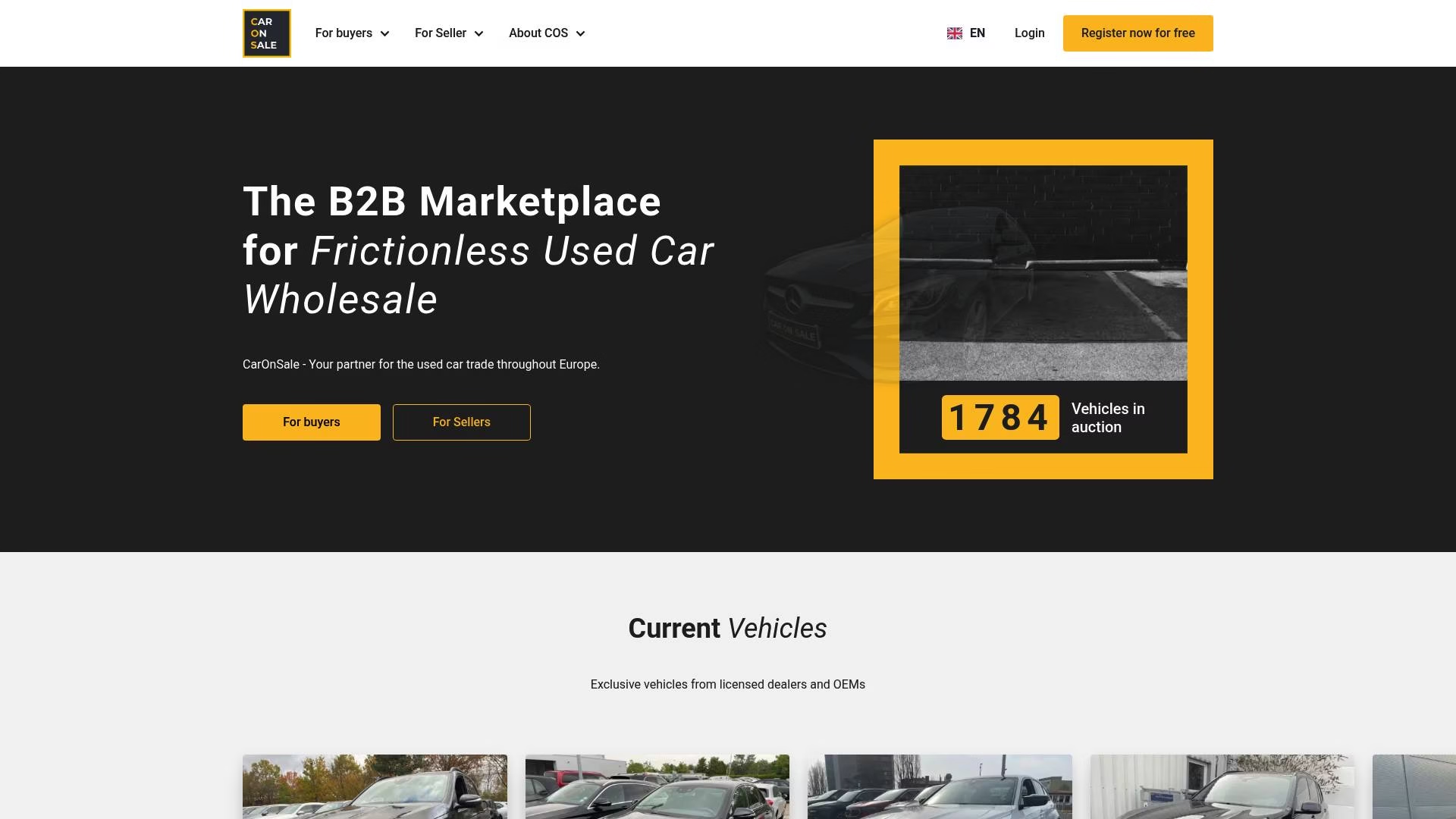
CarOnSale is a Berlin-based B2B auction platform, run by Castle Tech GmbH, that moves used stock between professional traders instead of selling to the public. Supply comes from licensed dealer groups, OEMs and company fleets, including a Mercedes-Benz lease-return programme auctioned every two weeks out of Austria and Italy. Roughly 130,000 cars a year go under the hammer out of about 1.3 million processed, with some 40,000 registered dealers bidding across 20-plus European markets; the company says over 85% of that stock never reaches the big public classifieds.
What you can buy
- Lease returns: end-of-contract cars, typically two to four years old with one previous owner and a documented service history, priced below comparable used stock.
- Trade-ins: part-exchange cars taken in by licensed dealers that do not suit their own forecourt.
- Ex-demo and manufacturer stock: demonstration and courtesy vehicles released by OEMs and their retail networks.
- Accident and damaged cars: Unfallwagen with recorded damage, sold on the condition report rather than repaired first.
- Commercial vehicles: a weekly multibrand van showroom alongside a weekly Mercedes-Benz commercial-vehicle sale.
- Retail cars across segments: volume-brand hatchbacks through to premium saloons and SUVs, with a twice-weekly Audi, BMW and Mercedes showroom for lots above 20,000 EUR.
How the bidding works
Registration is business-only, and private buyers cannot take part. You upload a commercial register extract, photo ID front and back, and a VAT identification number; accounts are normally cleared for bidding within one working day, and you can browse listings before activation finishes. Lots sit in themed showrooms with fixed closing times, some daily, others weekly or every two weeks, and the whole process runs online through the site or the mobile app, with a bidding agent for automated bids and a Power View screen for watching several cars at once. The format matters more than the countdown: an exclusive auction carrying no minimum price ends with the car sold to the highest bidder, while in a reserve auction your top bid is only an offer that binds you for five business days until the seller answers. Sellers may also set an instant-purchase price you can take on the spot or counter lower. If a reserve goes unmet, a post-auction negotiation runs for three business days from the close, and CarOnSale may collect offers from other buyers during it. Payment goes through the platform, papers follow by tracked courier, and you either collect the car yourself, book express collection, or pay for the EU-wide transport service.
What to check before you bid
The buyer fee starts at 99 EUR per car and is capped at the top end; volume buyers earn 5% off after five purchases, rising to 30% at a hundred, with minimum prices visible from the first tier up. Sellers pay 119 EUR only on a successful sale, which is worth remembering when you read a reserve. The COSCheck report, built from over 110 inspection points, at least 25 photos, an OBD scan and a battery test, is what you bid on, but the buyer terms are blunt about its status: condition reports do not constitute an agreed quality standard, sales are made excluding warranty claims, and faults costing under 300 EUR net to rectify do not count as a complaint at all. Inspection in that process falls at collection or delivery, so obvious defects have to be recorded immediately or they are treated as accepted, and you have nine business days to collect before standing fees begin. Confirm whether a car is invoiced net as an intra-community supply, which needs a valid VAT number, or falls under the margin scheme, where VAT cannot be shown separately and the cross-border exemption does not apply. Transport is quoted separately by route and vehicle and can wipe out the saving on a cheap car parked three countries away. Much of the interface still falls back to German, even though an English version exists.