Interencheres
- Open to private buyers
Visit official website www.interencheres.comCompare with another platform
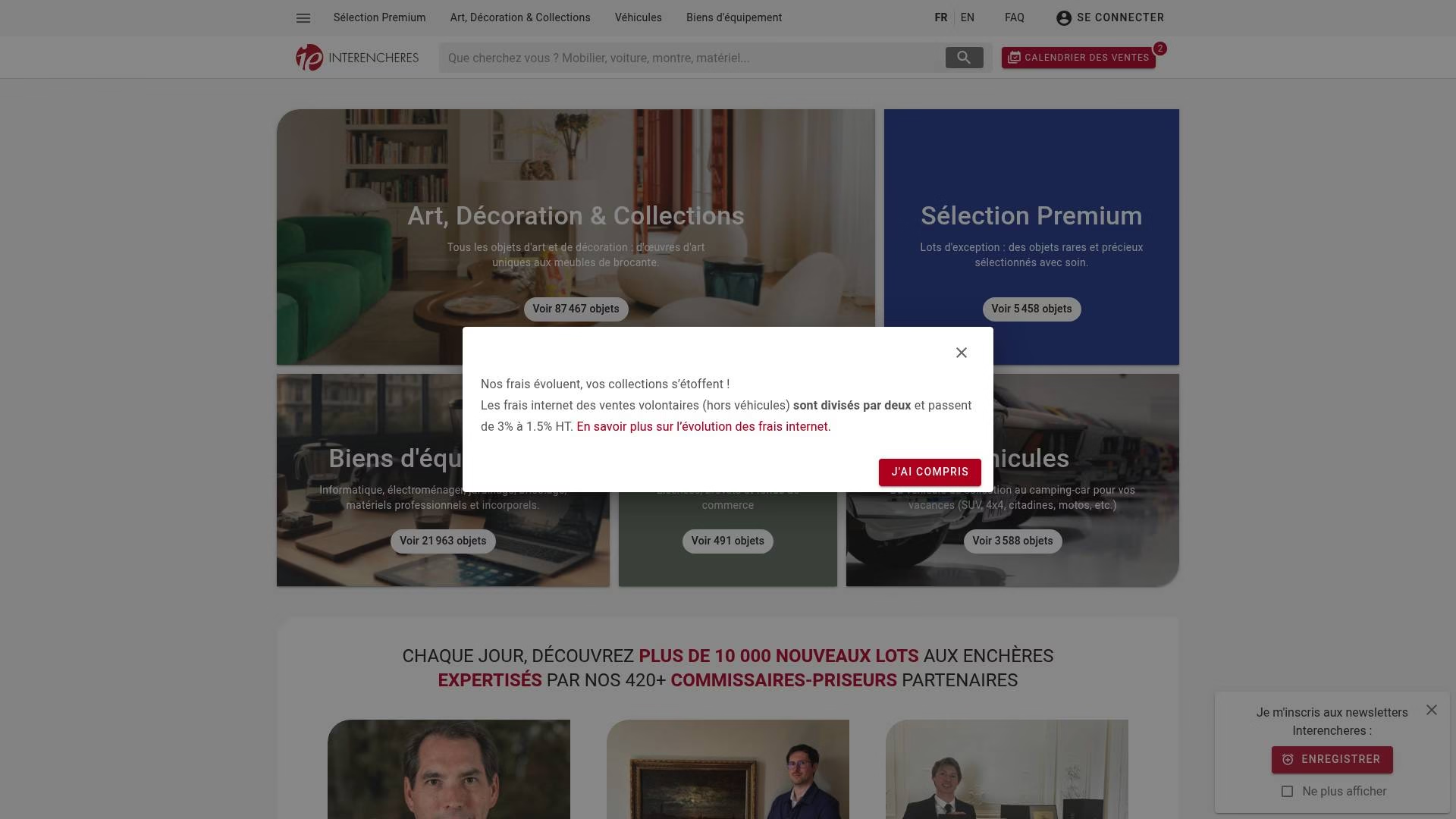
Interencheres is the shared catalogue and bidding system of the French auction profession, run from 14 rue des Pyramides in Paris by Commissaires-Priseurs Multimedia, a company created in 2000 by three auctioneers. More than 530 commissaires-priseurs publish here and over 10,000 new lots go up daily, from prestige catalogue sales in Paris to liquidation clearances in rural France. Voluntary sales carry goods owners consign freely, through houses supervised by the Conseil des Maisons de vente; judicial sales follow seizure or court-ordered liquidation and are run by commissaires de justice - so stock leans on company failures, seized and confiscated assets and private consignments.
What you can buy
- Art, furniture and collectables: around 116,000 lots - paintings and drawings, prints and lithographs, sculpture and bronzes, antique and design furniture, carpets and tapestries, militaria, stamps, musical instruments.
- Jewellery, watches, wine: the luxury leather section is headed Hermes, Chanel and Vuitton, with Cartier and Dior in the same sales; watches from Rolex and Patek down to job lots; over 4,000 lots of wine and spirits.
- Cars and two-wheelers: company and fleet cars, electric and hybrid, prestige and classic metal (Porsche, Jaguar, Maserati, Mercedes 190 SL, Ford Mustang, older Citroens), collector two-wheelers from Vespa and Motobecane to Norton and Triumph, quads, buggies and licence-free cars.
- Commercial and heavy vehicles: panel vans, tradesmen's vehicles, trucks and heavy goods vehicles, trailers and semi-trailers, motorhomes, plus a special-vehicles section for ambulances, tankers and fire appliances.
- Farm and construction plant: agricultural tractors and trailers, non-registrable farm tooling, and a plant section of excavators, bulldozers, loaders and compactors.
- Business equipment and stock: around 27,600 lots from closures - restaurant and hotel kitchens, joinery and sawmill machinery, hand and power tools, IT and phones, and 7,000-odd lots of new goods, customer returns and unsold stock. Boats, light aircraft and helicopters have their own section, as do licences, patents and business goodwill.
How the bidding works
You open an account by email or a Facebook, Google or Apple login, verify your identity, then register sale by sale: confirm you have read that house's conditions and leave card details. Many sales also take a caution - a card imprint never actually debited, which some houses make you top up before a dearer lot unlocks; releasing a hold depends on your bank and can take up to 15 days. Three formats run: catalogue sales, Live sales broadcast from the room with video so you bid in real time from anywhere, and Chrono sales, wholly online, running over a set number of days - a bid in the last minute restarts the clock at 60 seconds, though closing cannot be pushed past midnight. On both you can instead leave an automatic maximum, and the site states those ceilings are not shown to the auctioneer. Card payment goes through the site; anything else you settle with the house, which you also authorise to debit the card left in guarantee.
What to check before you bid
Costs are set sale by sale. Judicial sales carry the statutory 14.28% including tax; voluntary sales are priced freely by each house and generally run around 25%. Winning online adds an internet fee the house may recharge: 1.5% before tax (1.8% including) on furniture, art and professional equipment, or 60 euros before tax (72 euros) per vehicle. A "TVA recuperable" filter flags lots whose VAT a business can reclaim, but only if you registered as a professional before the sale. Each sale's conditions fix the fees, payment, collection and the limits on the house's liability for the state of the lots, so read them: once the hammer falls the lot is legally yours, and consumer withdrawal rights do not apply at public auction. Some lots are restricted and need paperwork or a bank guarantee before a bid counts. Collection is at the address the house names, by the account holder, once payment has landed; leave a lot too long and storage charges follow. Delivery runs through the Interencheres partners ThePackengers, Cocolis and MBE Auction, the house's own carrier, or a haulier you book. The interface has an English version, but the conditions and the auctioneer's chant stay French, and the houses sit nationwide, so budget for transport.