eauction.gr
- Open to private buyers
Visit official website eauction.grCompare with another platform
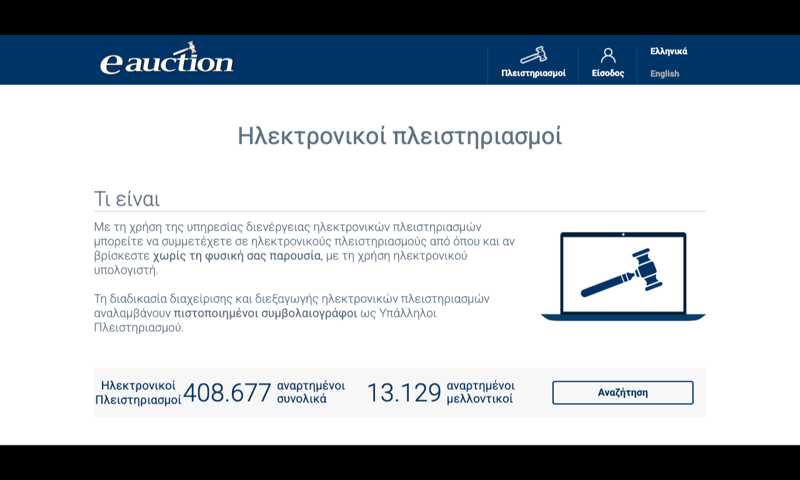
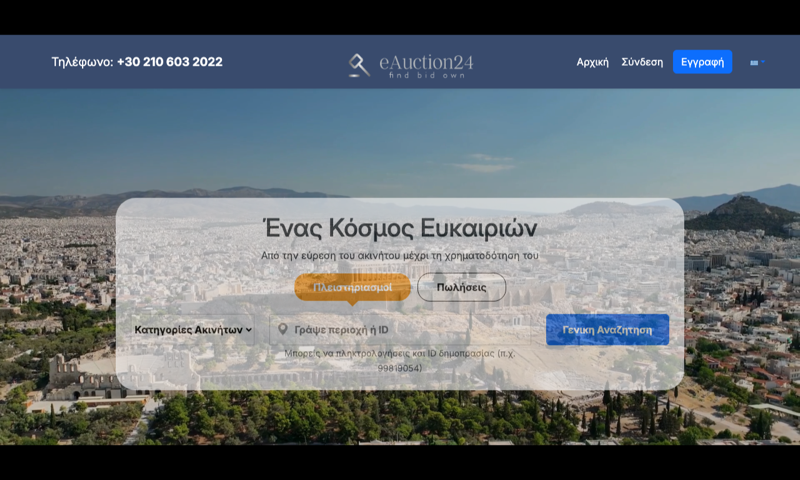
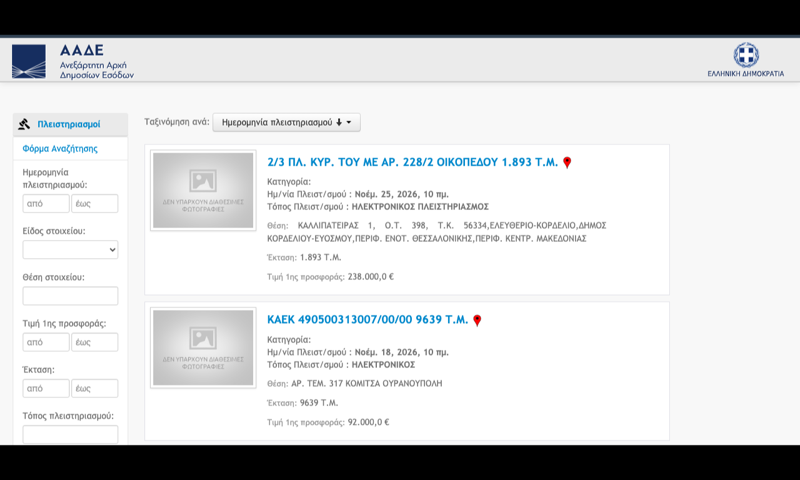
eauction.gr is the electronic auction service through which every forced sale in Greece is now conducted. Since the reform that moved enforcement online, a property or asset seized in Greek proceedings is no longer knocked down in a courtroom: the sale runs on this platform, managed by a certified notary acting as the auction official. The scale is unusual for a national portal — over 400,000 auctions have been published on the service to date, with several thousand scheduled ahead at any time. For a foreign buyer this is the single address that matters in Greece, because the alternative sources are law-firm listings that all point back here.
What you can buy
- Residential property: apartments and houses seized in enforcement, the bulk of the catalogue after a decade of non-performing mortgage loans.
- Commercial property and land: shops, offices, warehouses, plots and agricultural land.
- Vehicles: cars and commercial vehicles taken in enforcement against individuals and companies.
- Business assets: machinery, equipment and stock from enforcement against trading companies.
- Shares and claims: the intangible assets that come out of a Greek enforcement file.
How the bidding works
Registration is as a candidate bidder, and the route differs by where your tax number is from. With a Greek AFM you authenticate through TaxisNet, the tax authority's own login, and activate the account by SMS. Without a Greek AFM the process is deliberately manual: you pick the specific auction you want to join, enter your details, and then post physical documents proving those details are valid — the notary running that sale checks and approves them before your account activates. Participation is applied for per auction rather than once for the platform, so a foreign buyer needs to start well before the sale date. Auctions are published at least well in advance with the property details, valuation and starting price, and bidding is remote, with no physical presence required.
What to check before you bid
Two things decide whether a Greek enforcement purchase is practical for you. The first is the timetable: the postal document route for foreign bidders is not a formality you can complete in a week, and each auction needs its own application. The second is the deposit, which enforcement sales require before bidding and which is a percentage of the starting price rather than a token amount. Beyond that, an enforcement sale transfers the debtor's position, so on property you need a Greek lawyer to check what charges, tenancies or occupancy survive the sale — the platform publishes the file, not an opinion on it. The interface offers English, but the binding documents and the notary's correspondence are Greek.