Openbare Verkoop
- Open to private buyers
Visit official website openbareverkoop.nlCompare with another platform
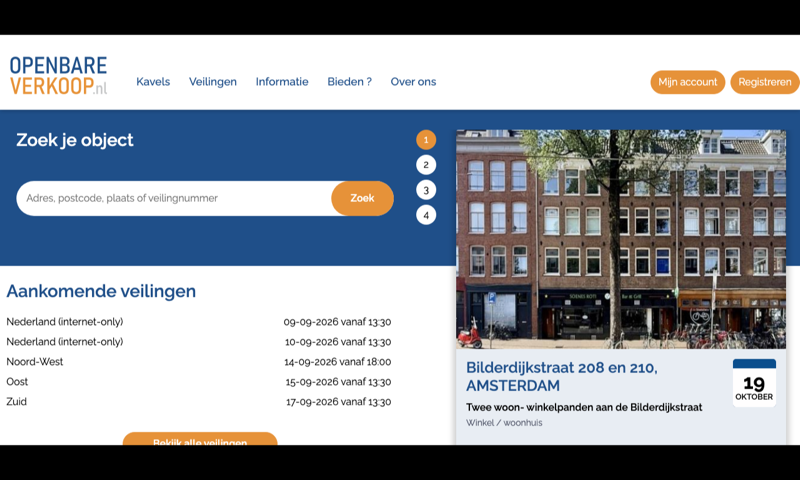
When a Dutch property is sold at forced sale, the auction is conducted by a civil-law notary, and this is the platform where those sales are published and bid on. The calendar is organised the way the Dutch market works: regional sales for Noord-West, Oost and Zuid, plus internet-only sales that run nationally on their own dates.
What you can buy
- Houses — detached, semi-detached, terraced and corner properties.
- Flats and apartments, including upper-floor units with storage.
- Combined shop and living premises, such as the Bilderdijkstraat pair in Amsterdam.
How the bidding works
Registration is the part that surprises people. You register as a bidder with the Stichting Openbare Verkoop, then print the registration declaration and take it, with your identity document and your mobile phone, to a notary to complete the process in person. That is not a formality that can be done the night before a sale — start it well in advance of any auction you want to attend.
What to check before you bid
Dutch foreclosure sales run in two stages, and what you are bidding on, whether the property is occupied and what charges survive the sale are all set out in the notarial conditions for the specific lot. Read them, and read them for that lot rather than assuming a house rule — Dutch auction conditions vary between notaries. The site is in Dutch.