Dorotheum
- Open to private buyers
Visit official website fahrzeuge.dorotheum.com/enCompare with another platform
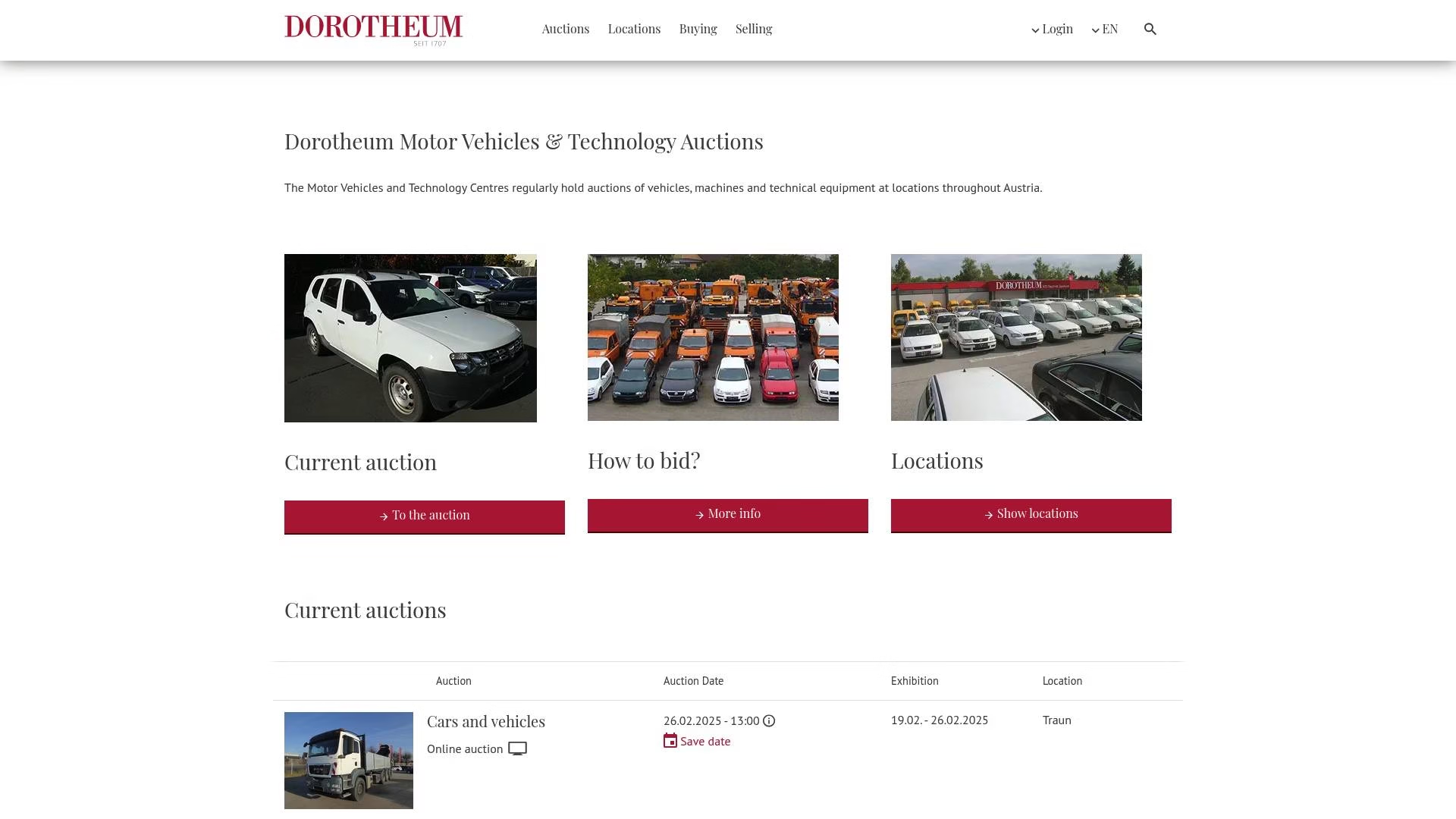
Dorotheum's "Fahrzeuge – Technik" department is the vehicle and machinery arm of the Austrian auction house founded in Vienna in 1707 by Emperor Joseph I, and most of what it sells comes off Austrian public fleets: ÖBB railways, motorway operator Asfinag, provincial and municipal fleets such as Land Tirol, Land Oberösterreich and Magistrat Innsbruck, the utility TIWAG, and — per Dorotheum's own list of consignors — the federal government, its ministries, the army, the police and the customs and revenue authorities. Private owners and leasing companies consign here too, and the department handles fleet and lease remarketing. Two Fahrzeug- und Technik-Zentren, Vösendorf near Vienna and Traun near Linz, organise the sales, but the auctions themselves are staged across Austria, often in the consignor's own yard: Radochen, Innsbruck, Ansfelden, Wels, Hohenems, with further vehicle branches in Graz and Klagenfurt. A single-fleet sale runs 40 to 60 lots; the big Vösendorf and Traun catalogues run 400 to 650. Art, antiques and jewellery stay with the parent house in Vienna.
What you can buy
- Ex-fleet cars: saloons, estates and small hatchbacks retired from railway, utility and public-authority duty, usually 90,000 to 200,000 km and catalogued with dents and paint damage; the occasional electric car turns up.
- Vans, trucks and trailers: panel vans and box vans, tippers, dropside and box bodies, tractor units, low-loaders and a long run of trailers, plus the odd bus.
- Construction and municipal machinery: mini excavators, wheel loaders, forklifts and telehandlers, tractors, rollers, compressors, generators and mowers, sometimes in dedicated machinery sales.
- Motorcycles and mopeds: small-capacity machines and older bikes, often sold in batches.
- Classic cars and automobilia: the Vösendorf sales titled "Fahrzeuge, Technik & Klassische Fahrzeuge" mix workhorses with collector lots — a 1963 Messerschmitt Tiger TG500, a 1932 Steyr 30S Luxus-Cabriolet, a 1974 Jaguar E-Type V12, a 1955 Cadillac Series 62.
- Technical equipment: workshop and power tools, measuring gear, spares and mixed job lots.
How the bidding works
Bidding runs online through myDOROTHEUM and closes on the auction date, normally at 13:00; a few ÖBB sales at Radochen have also been staged as saleroom or live-bidding auctions. Registration is free but compulsory even if you already hold a Dorotheum customer number, and you upload a copy of an official photo ID. Every lot carries a starting price; where an estimate range is shown, the start sits between half the lower estimate and the lower estimate, and bids climb in steps of about ten percent. Viewing opens about a week beforehand at the Vösendorf and Traun centres, typically 08:00 to 16:00 and until 13:00 on auction day; sales held at a consignor's site, army disposals included, set their own viewing arrangements per auction.
What to check before you bid
The premium depends on a symbol beside the catalogue number. Lots marked (V) are agency sales without VAT at hammer price plus 22 percent; lots marked (+) are fully taxable — hammer plus 18.34 percent plus 20 percent Austrian VAT on the total — a materially different bill. Companies VAT-registered elsewhere in the EU can have the Austrian VAT lifted on qualifying lots, but only if Dorotheum holds the VAT number before the bid is accepted; on (V) lots exported outside the EU, VAT cannot be reclaimed at all. Everything is sold as seen, with no warranty and no returns: catalogue lines routinely read damaged, long standing time, not roadworthy, parts missing, in need of repair — so the viewing week matters more than the photos. Payment is by cash, bank transfer or debit card, to a deadline set per auction, from four working days to about a week. Collection is weekdays only and released after payment, at hours set per auction — 08:00 to 14:00 at Vösendorf. Arrange transport yourself: some sales state that no forklift or crane is available for loading, and storage runs €20 a day per car and €40 a day per truck once the collection deadline passes. Lot descriptions are German-first; the English pages mainly explain the process.