Proventura
- Trade buyers only
Visit official website www.proventura.deCompare with another platform
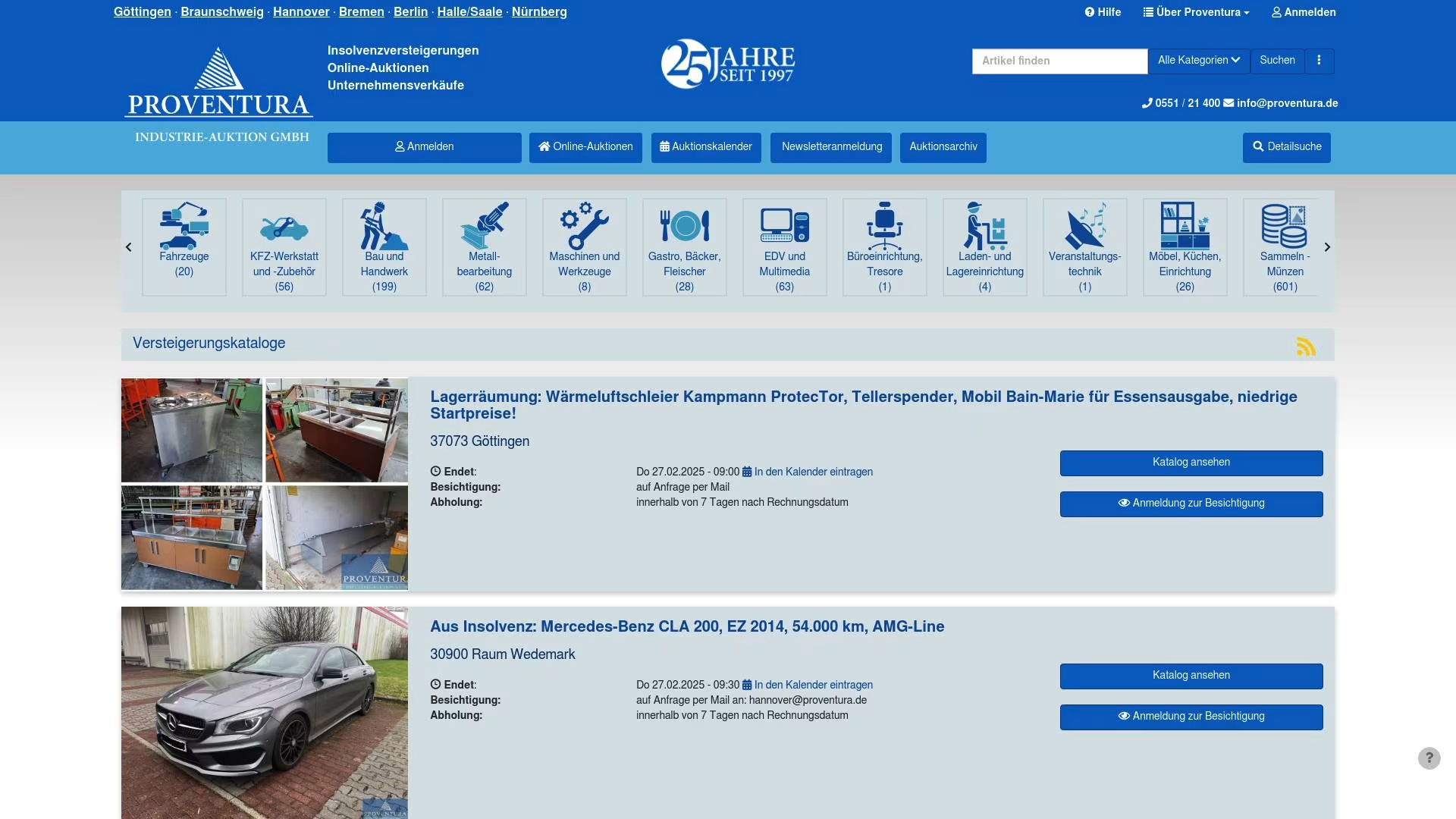
Proventura Industrie-Auktion GmbH has been selling off movable business assets since its founding in Göttingen in 1997, mostly for insolvency administrators and also for banks, leasing companies and public authorities. The head office is at Hölleweg 3-7 in Göttingen, with branches in Braunschweig, Hannover, Bremen, Berlin, Stralsund, Halle/Saale and Nürnberg, so lots stand in workshops, yards and shut-down premises nationwide. Stock arrives as entire company inventories - an insolvent building firm, a car dealership, a closed butcher's shop - split into hundreds of lots on the German-language portal.
What you can buy
- Vehicles: ex-fleet cars, panel vans, trucks and buses from insolvent hauliers and dealerships, including Mercedes-Benz and Renault commercial vehicles.
- Production machinery: metalworking and woodworking machines, plastics equipment, compressors, excavators, forklifts and pallet trucks.
- Vehicle workshops: lifting platforms (five from one insolvent dealership), body and paint shop equipment, diagnostic gear, tyre mounting and balancing machines.
- Catering and food trade: bakery ovens, butchery cutters and slicers, complete restaurant kitchens, refrigerated counters.
- Warehouse and shop fittings: pallet and cantilever racking, Tego shelving, counters, full store interiors.
- Office and IT: desks and office suites, safes, servers and laptops, LED screens, event technology.
- Farm and construction: John Deere tractors and implements from agricultural liquidations, site machinery and trade tools.
- The rest of the estate: coin collections, paintings, watches, clothing, medical and dental equipment, occasional real estate.
How the bidding works
Registration comes first, and only businesses get in: companies, tradespeople, freelancers and public institutions, with consumers excluded outright under § 13 BGB. Most sales are timed online auctions; a bid in the final minute usually extends that lot by 20 seconds and pushes the following lots back by the same amount. Some sales - art auctions and the occasional complete inventory - run live on site. The award arrives by e-mail, and that message forms the contract. Where a reserve applies, the lot is knocked down subject to approval and you stay bound for 14 calendar days while the seller decides. Unsold lots usually come back as a Nachverkauf, a follow-up catalogue with sharply reduced starting prices, often one euro. Payment falls due on the day of the award, ownership passes only on full payment, and collection happens on the dates printed in the listing.
What to check before you bid
The buyer's premium is normally 18 percent of the hammer price and bids are quoted net, so add the premium and German VAT before setting your limit. Foreign buyers pay that VAT up front as a deposit: EU companies get a zero-rated invoice after a VAT ID check and the deposit back against a Gelangensbestätigung, non-EU buyers once the tax office accepts export proof, which takes weeks. Used goods are sold as they stand with warranty fully excluded, and catalogue data - year of manufacture, dimensions, quantities - are non-binding, so viewing by arrangement is worth the trip. Dismantling, loading and transport are your cost and risk; supply cables laid in the building must stay put, gas and water lines may be cut only by qualified trades and in agreement with the auctioneer, and building damage falls on you. Some lots come with no loading help on site, a collection slot outside the published dates costs 250 euro, and missing the removal window brings storage charges of about 10 euro net per day. Listings and correspondence are in German.